
Why How Curb Appeal Affects Your Home Appraisal Matters More Than You Think
How curb appeal affects your home appraisal is straightforward: the exterior condition and appearance of your home directly shapes how an appraiser rates its condition, estimates its effective age, and compares it to similar homes nearby. Here’s a quick breakdown:
| Curb Appeal Factor | Impact on Appraisal |
|---|---|
| Roof condition | Signals structural integrity; poor condition lowers condition rating |
| Siding and exterior paint | Affects perceived maintenance and comparable sales positioning |
| Garage door | Can occupy up to one-third of front-facing exterior; strong ROI on replacement |
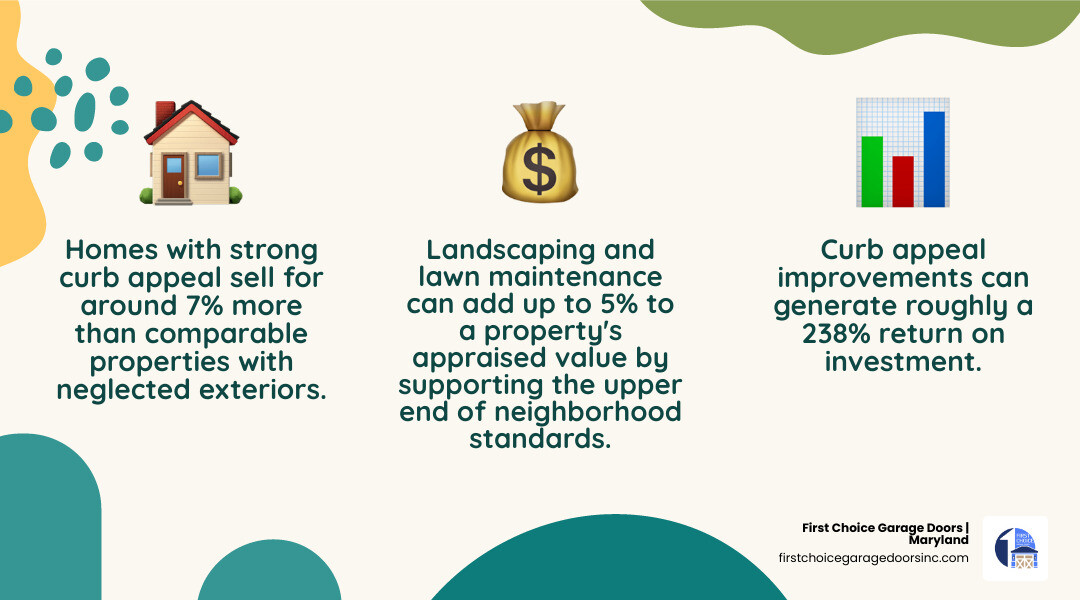
| Landscaping and lawn | Supports upper end of neighborhood value range; adds up to 5% in value |
| Driveway and walkways | Cracks and staining signal deferred maintenance to appraisers |
| Gutters and trim | Visible neglect can reduce condition rating and raise inspection concerns |
Homes with strong curb appeal tend to sell for around 7% more than comparable properties with less inviting exteriors. And according to the National Association of Realtors, curb appeal improvements can generate roughly a 238% return on investment.
For Maryland homeowners preparing for an appraisal, the exterior of your home isn’t just about looks — it’s the first data point your appraiser uses to assess value. A neglected exterior can drag down your condition rating before the appraiser ever steps through the front door.
Understanding How Curb Appeal Affects Your Home Appraisal
When an appraiser pulls up to your Maryland property, their evaluation begins the moment they shift their car into park. While many homeowners believe appraisals are calculated strictly by square footage and interior upgrades, the reality is that the exterior of your home acts as a physical handshake. It sets the tone for the entire inspection.
An appraiser’s job is to determine the objective market value of your property. To do this, they must look at your home through the dual lenses of physical condition and neighborhood conformity. If the front yard is overgrown, the siding is covered in green mold, and the garage door is sagging, the appraiser is immediately primed to look for signs of neglect inside. Conversely, a polished, pristine exterior signals that the home has been meticulously cared for, giving the appraiser confidence in the property’s overall integrity.
Furthermore, appraisers do not value your home in a vacuum. They compare your property to recent comparable sales (comps) in your immediate neighborhood. If your home has superior curb appeal compared to the average home in Easton, Columbia, or Frederick, it positions your property at the upper end of the neighborhood’s value range.
How Curb Appeal Affects Your Home Appraisal Through Condition Ratings
The Uniform Appraisal Dataset (UAD) requires appraisers to assign a standardized Condition Rating (C-rating) to every property, ranging from C1 (brand new construction) to C6 (severe structural damage or deferred maintenance). Most well-maintained, lived-in homes fall somewhere between C3 and C4.
Your home’s exterior presentation plays a massive role in which side of this line you land on:
- C3 Rating: The exterior and interior show normal wear and tear, but all major components are fully functional, regularly maintained, and require no immediate repairs.
- C4 Rating: The home is functional but features minor deferred maintenance or cosmetic wear that needs addressing.
A cracked, peeling garage door, stained siding, or broken gutters can easily drag your home down to a C4 rating. This slip from C3 to C4 can result in a lower appraisal value. By focusing on smart exterior updates, you are actively Boosting Your Appraisal Value Starting From the Sidewalk and ensuring the appraiser views your home’s physical condition favorably.
How Curb Appeal Affects Your Home Appraisal via Effective Age
Another critical calculation in your appraisal report is effective age. While your home has a chronological age (the year it was built), its effective age is an estimate of its condition relative to its utility.
For example, a home built in 1990 in Columbia, MD, might have a chronological age of 36 years in 2026. However, if the homeowners have kept up with modern exterior siding, updated the landscaping, and replaced the garage door, the appraiser may assign it an effective age of just 15 years.
On the flip side, a home built in 2010 that has suffered from years of deferred maintenance and neglected curb appeal could easily be assigned an effective age of 30 years. When you neglect the face of your home, you signal to the appraiser that major structural components may also be failing. To protect your hard-earned equity, Don’t Let an Old Door Stall Your Sale or lower your appraisal; keeping the exterior fresh keeps the effective age low.
The Appraiser’s Checklist: Key Exterior Elements Under Scrutiny
During a professional appraisal, the inspector systematically reviews several key exterior elements. They aren’t just looking to see if your home is pretty; they are analyzing architectural harmony, durability, and safety.
| Exterior Element | What Appraisers Look For | Potential Appraisal Impact |
|---|---|---|
| Roof & Gutters | Missing shingles, moss, rust, proper drainage | High; critical for structural integrity |
| Siding & Trim | Cracks, peeling paint, rot, mold, warping | Medium-High; affects C-rating and insulation |
| Garage Door | Dents, alignment, insulation, visual dominance | High; heavily influences first impressions and security |
| Landscaping & Lawn | Overgrowth, dead trees, neat edging, weed control | Medium; supports marketability and neighborhood standards |
| Driveway & Pathways | Major cracks, shifting concrete, trip hazards, staining | Medium; safety issues can trigger mandatory repairs |
Roof, Siding, and Gutters
The “shell” of your home is the first line of defense against Maryland’s seasonal weather. Appraisers look closely at:
- Roof Condition: They will check for curling, missing, or damaged shingles. A roof nearing the end of its life cycle will immediately negatively affect your appraisal.
- Siding Quality: Whether your home features vinyl, brick, wood, or fiber cement, the siding must be clean and intact. Mold growth, wood rot, or cracked vinyl panels are major red flags.
- Gutter Maintenance: Sagging or clogged gutters prevent proper water drainage. If water is pooling near the foundation, the appraiser will suspect basement moisture issues or structural shifting.
Landscaping, Lawns, and Pathways
You don’t need an award-winning botanical garden, but your landscaping must be tidy and intentional.
- Manicured Lawns: A freshly mowed, edged, and weeded lawn shows pride of ownership. In Maryland, keeping your grass green and healthy can add up to 5% to your home’s overall value.
- Native Plants: Incorporating low-maintenance, climate-appropriate shrubs and perennial flowers adds pops of color without suggesting high-maintenance burdens to future buyers.
- Walkway Safety: Appraisers are highly sensitive to safety issues. Uneven concrete pathways, loose pavers, or cracked steps are tripping hazards that can hold up an appraisal.
Driveways and Hardscaping
Your driveway is a highly visible element of your front facade.
- Driveway Sealing: If you have an asphalt driveway, applying a fresh coat of sealant to fill minor cracks can make the entire property look brand new. For concrete driveways, a thorough power washing to remove oil stains and dirt works wonders.
- Hardscaping Features: Retaining walls, stone borders, and well-defined patios contribute to what researchers call the “curb appeal premium.” Studies show that a home’s individual curb appeal is worth roughly twice as much as the curb appeal of the homes across the street, making hardscaping a highly localized value driver.
High-ROI Upgrades to Boost Your Appraisal Value
If you are looking to maximize your home’s value before an appraiser visits, you should focus your budget on home improvement projects that offer the highest return on investment (ROI) and maximum marketability.
Garage Door Replacement and Maintenance
Because the garage door can occupy up to one-third of your home’s front-facing exterior, upgrading it is one of the single most impactful decisions you can make. According to industry data, garage door replacement consistently ranks as one of the highest-yielding home improvements, often recovering over 193% of its cost at resale.
A modern, insulated garage door does more than look beautiful; it improves your home’s overall energy efficiency and structural security. If your garage is attached or sits beneath a bedroom, an insulated door with a high R-value helps regulate temperatures, lowering utility bills — a detail appraisers love to document.
To explore how this upgrade works in your favor, check out the Three Ways Your Garage Door Can Add Property Value and discover 3 Ways Your Garage Door Can Boost Your Curb Appeal.
Entryway and Front Door Upgrades
Your front door is the focal point of your entryway. It draws the eye and acts as the “anchor” of your home’s facade.
- Steel Entry Doors: Upgrading to a modern steel entry door offers incredible cost recovery and enhances home security.
- Front Door Paint: If a replacement isn’t in the budget, painting your existing door a classic, high-contrast color (such as deep navy, charcoal, or classic black) makes a strong visual statement.
- Hardware Updates: Swapping out tarnished locksets, hinges, and handles for modern matte black or brushed brass hardware instantly modernizes the entry.
To understand how these entryway elements work in tandem with other exterior features to maximize equity, read about How a Garage Door Can Add Value to Your Home.
Low-Cost, High-Impact Quick Fixes
You don’t have to spend a fortune to elevate your home’s exterior before the appraiser arrives. Several quick weekend projects can deliver immediate results:
- Power Washing: Renting a pressure washer to clean your siding, walkways, and driveway removes years of dirt, mold, and pollen in a single afternoon.
- Exterior Lighting: Install solar pathway lights or update outdated wall sconces flanking your front door and garage. Proper lighting adds elegance and highlights your home’s architectural features.
- Mailbox and House Numbers: Replace a faded, rusted mailbox with a modern design, and install clean, high-contrast house numbers that are easily visible from the street.
For inspiration on choosing the right customized exterior elements for your home, take a look at why custom solutions make sense in our guide: Fayetteville Curb Appeal: Why Custom Garage Doors Are the Best Investment.
Frequently Asked Questions About Curb Appeal and Appraisals
Can poor curb appeal signal deferred maintenance and lead to a lower appraisal?
Yes. When an appraiser observes peeling paint, rot, cracked driveways, or overgrown landscaping, they assume these issues are just the tip of the iceberg. This visible neglect signals “deferred maintenance,” leading the appraiser to suspect that critical interior systems (like plumbing, electrical, or structural framing) may also be neglected. This assumption can result in a lower condition rating and a reduced overall valuation.
How do appraisers compare a property’s curb appeal to neighborhood standards?
Appraisers use a principle called “neighborhood conformity.” They evaluate how well your property fits into the existing aesthetic and maintenance standards of your local area. If your home is surrounded by beautifully maintained properties in Frederick or Columbia, but your exterior is neglected, your home will be penalized for failing to meet the neighborhood average. Conversely, having the best curb appeal on the block helps support a valuation at the absolute top tier of local comparable sales.
What is the typical ROI for curb appeal projects like landscaping and painting?
Curb appeal projects offer some of the highest returns of any home improvement category. While a high-end kitchen remodel might only recoup around 68% of its cost, basic exterior improvements frequently yield over 100% ROI. Standard landscaping and lawn care upgrades often yield over 200% cost recovery, while exterior painting and garage door replacements consistently top the charts for value added relative to investment.
Conclusion
Maximizing your home’s value starts long before an appraiser steps inside. By systematically addressing your roof, siding, landscaping, and driveway, you can secure a stronger condition rating, lower your home’s effective age, and stand out positively against local comps.
As you prepare your checklist, your garage door is one of the most dominant visual features of your home’s exterior. Keeping it in peak physical and cosmetic condition is essential for a successful appraisal outcome.
At First Choice Garage Doors, we provide expert garage door repair, maintenance, and professional installation services across Maryland. Our highly experienced teams in Easton, MD, Columbia, MD, and Frederick, MD deliver unmatched expertise, quality, and safety to ensure your home always makes a spectacular first impression.
Ready to elevate your home’s curb appeal and secure your property value? Schedule a professional garage door consultation with First Choice Garage Doors today!